Why Is My Dog Scratching So Much in Spring?
The Complete Guide to Seasonal Itching in Dogs and CatsReviewed by the Animalcare Group Veterinary Team

This guide covers both dogs and cats. Dogs scratch, cats overgroom. The symptoms look different, but the causes are often identical. You'll find dog-specific and cat-specific sections throughout, so whichever pet you're worried about, you're in the right place.
If your dog has been scratching daily since the weather warmed up, you're not alone and it's not something to ignore. Spring is the season when we see the sharpest rise in dermatology consultations, and in most cases, the pet parents who come in have been watching their pet scratch for weeks, quietly hoping it would stop on its own. But it rarely does.
This guide will walk you through what is actually happening in your pet's body during spring, how to tell the difference between a mild seasonal reaction and something that needs veterinary attention, and what you can do to help right now.

Is it normal for dogs to scratch more in spring?
A healthy dog will scratch here and there after rolling in the grass, shaking off water, adjusting a collar. What you should not be seeing is a dog who scratches the same spots repeatedly throughout the day, who wakes from sleep to scratch, or whose skin is showing any sign of redness, thinning hair, or broken skin.
When scratching becomes a daily ritual, it is a symptom. Not a habit, not a personality trait: a symptom. Your dog is in discomfort, and the discomfort has a cause. Spring is particularly hard on sensitive animals because multiple triggers arrive at once: pollen levels spike, parasite populations surge after the cold months, and the change in routine (more outdoor time, different grass, new environments) can expose pets to allergens they haven't encountered since last year.

1. Pollen and environmental allergens
You'll typically see it on the face, paws, belly, and armpits. Dogs who come back from walks and immediately start licking their paws are usually reacting to contact with pollen-coated grass. Some dogs develop redness between the toes, a brownish staining from saliva (the body's response to persistent licking), or recurring ear inflammation because the ear canal is also skin.
Peak months for pollen-related itching in Europe: March to July, with a secondary spike in late summer for weed pollens.

2. Parasites, including indoor fleas
In spring, flea populations explode after winter dormancy. Flea saliva is a potent allergen; even a single bite can trigger an intense allergic reaction in sensitive dogs, what we call flea allergy dermatitis (FAD). The maddening part is that you may never find a flea: the dog's scratching and grooming remove them almost immediately, leaving only the reaction behind.
Ear mites and mange mites follow similar seasonal patterns, and both cause intense localised itching that is easy to confuse with pollen allergy if the ears and face are involved.
3. The itch cycle: why scratching makes it worse
When your dog scratches or licks irritated skin, the mechanical trauma releases histamine and other inflammatory mediators from mast cells in the skin. That release causes more itching, which causes more scratching, which causes more histamine release. Veterinary dermatologists call this the itch-scratch cycle, and once it is established, it becomes increasingly difficult to interrupt without intervention. The skin barrier also deteriorates with repeated scratching, cracked or broken skin invites secondary bacterial and yeast infections, which compound the original problem and extend the treatment window significantly.
This is why starting early matters. A dog caught in the itch cycle for two weeks is far easier to help than one who has been scratching for three months.
4. When cats overgroom instead of scratch
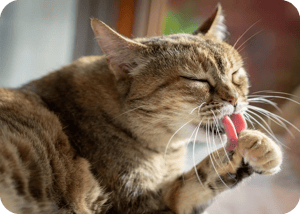
Cats are also far more likely to do this at night or in private, which means it can progress considerably before pet parents notice. Overgrooming in cats has the same primary causes as scratching in dogs: environmental allergens, parasites and stress, all of which peak with the disruption of the spring transition.

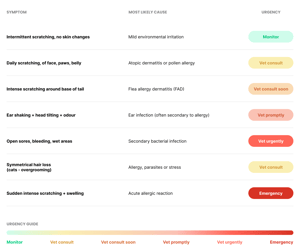
How to tell if it's serious: a symptom guide

What you can do at home
and when to call the vet
Keep a symptom log
This is the single most useful thing you can do before a vet appointment. Note when scratching happens (morning, evening, after walks), which body parts are affected, how long it lasts, and whether anything has changed recently: food, detergent, new bedding, parks visited. Patterns tell us a great deal.
Check for fleas thoroughly
Use a fine-toothed comb over white paper and look for flea dirt: dark specks that turn reddish-brown when wet. Pay particular attention to the base of the tail and groin. If you find evidence of fleas, treat both the animal and the environment simultaneously.
Clean, protect and care for your dog’s ears
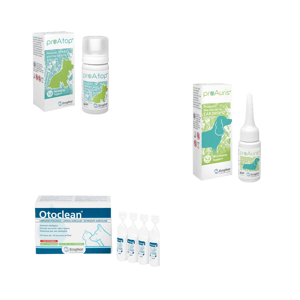
Dogs prone to ear issues, especially during allergy seasons, benefit from regular ear care. Inflammation and the build-up of wax and debris can disrupt the ear’s natural balance, leading to ongoing discomfort. Gentle cleaning with a veterinary-recommended product such as Otoclean — suitable for both dogs and cats — helps remove excess wax and debris, supporting good ear hygiene. After cleaning, maintaining the ear’s natural microbiome balance is key. This is particularly important after antibiotic or antifungal treatments, or in non-infectious ear conditions linked to microbiome imbalance. Probiotic ear drops such as proAuris (for dogs) help restore this natural balance, supporting a healthy ear environment and helping to protect against future imbalances.
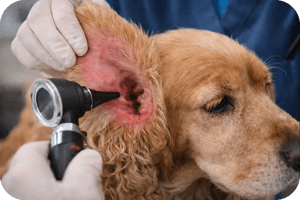
It is worth noting that dogs with allergies frequently also develop otitis — inflammation of the ear canal, often presenting with redness, scratching at the ears, and discharge. Any such signs should be assessed by a vet to rule out an active infection before home management begins. In non-infectious cases, or following treatment of an underlying infection, dogs may benefit from a probiotic ear product such as proAuris, which helps restore and maintain the balance of the ear microbiome and supports protection against recurrence.

Support your dog’s skin where it needs it most
Dogs with sensitive or allergy-prone skin can develop localised lesions that are not always caused by infection. In many cases, these skin issues are linked to a disruption of the skin’s natural balance and a weakened skin barrier. Supporting the skin between veterinary visits is key to helping maintain comfort and preventing recurrence.
Topical probiotic solutions such as proAtop, formulated with live beneficial bacteria, help restore the skin’s natural balance and reinforce its protective barrier. By supporting hydration, skin integrity and natural defences, they promote a healthier skin environment. This approach is especially useful for dogs with mild or seasonal atopic dermatitis, or for ongoing care after treatment, helping to maintain skin health over time.

Choose the right bathing routine for sensitive skin
Bathing your dog too often with regular shampoos can dry out the skin and make irritation worse. When a bath is needed, use a gentle shampoo recommended by your veterinarian. These specially formulated shampoos help clean and soothe the skin while protecting its natural barrier. During flare-ups, bathing once/twice a week is usually enough, unless your veterinarian advises otherwise
Know when to go
If scratching is daily, if the skin looks red or broken, if your dog is losing sleep or you are losing sleep, if there is any smell from the skin or ears: these are vet-visit signs, not wait-and-see signs. Seasonal allergies respond well to treatment when caught early; the same conditions managed poorly for months become chronic, expensive, and significantly harder on your animal.
Frequently Asked Questions
This is one of the most common presentations we see. Flea allergy dermatitis can occur with very low flea burdens, sometimes a single bite is sufficient in a sensitised dog. Dogs also groom fleas off themselves quickly, leaving no trace. The absence of visible fleas does not rule out flea allergy. If your dog is scratching intensely around the lower back and tail base, check it with your vet, treat for fleas and reassess.
Yes. Cats are exposed to outdoor allergens through open windows, on clothing, and on the bodies of other pets who go outside. Indoor cats can also react to indoor allergens (dust mites, mould) that are disturbed by spring cleaning. Overgrooming, particularly of the belly and lower back, is the usual presenting sign.
Paw licking after outdoor walks is one of the most reliable signs of contact pollen allergy. The paws pick up allergen-coated grass and soil particles on every walk. Rinsing paws with clean water after each walk can reduce exposure significantly. If the licking is daily and the skin between the toes is pink, red, or stained dark brown from saliva, a vet consultation is appropriate.
The location of itching is often the first clue. Fleas concentrate at the lower back, tail base, and groin. Environmental allergies typically affect the face, paws, and belly. Mange tends to affect the ear tips, elbows, and hocks. A systematic examination by your vet, sometimes including a skin scrape or cytology, will usually clarify the diagnosis quickly.