A practical guide to keeping your dog or cat’s teeth healthy

This guide walks you through what to look for, what to do, and how to build a routine that actually fits your life.

Tooth

What a healthy pet mouth should look like

Take a calm moment, ideally in good light.


Healthy teeth should look off-white and relatively clean.
The gums should be pale pink (or naturally pigmented, depending on breed), without swelling along the edges.

Now consider a few gentle questions:

  1. Has your pet’s breath become consistently unpleasant?

  2. Do you see yellow or brown deposits near the gum line?

  3. Do the gums look slightly red where they meet the teeth?

  4. Is chewing slower than before?

  5. Has your dog stopped enjoying certain chew toys?

  6. Is your cat grooming less or preferring softer food?


One small change isn’t always alarming. But patterns matter.

If you ever notice bleeding, loose teeth, facial swelling, or clear discomfort when eating, that’s the moment to call your veterinarian.


split_image_1

How dental disease develops

Plaque forms naturally every single day. It’s a soft film of bacteria that settles on the teeth after eating.

If it isn’t removed, it hardens into tartar. Once tartar is in place, the gums become irritated. This stage called gingivitis is common and often reversible with proper care.

Left unmanaged, inflammation can progress deeper below the gum line. That’s when dental disease becomes more complex and may require professional treatment.

The key isn’t perfection. It’s interruption. If you disrupt plaque daily, you slow the entire process.

Building a dental routine that works at home

Brushing remains the most effective way to clean teeth directly. When a dog or cat accepts brushing, it provides mechanical removal right where plaque begins.

But not every pet tolerates a toothbrush… and that’s okay !

Many families find success with combinations. A water additive can provide daily whole-mouth coverage with no handling stress. Wipes can help introduce mouth contact gently. Enzymatic gels support plaque control at tooth level. Dogs who enjoy chewing may benefit from textured dental sticks or chews that add mechanical cleaning.

The best routine is the one you’ll repeat tomorrow. 
Remember: consistency always beats intensity.

split_image_2

Dental Care for Dogs

Dogs often show signs through breath changes or reduced enthusiasm for chew toys.

For dogs who dislike brushing, daily water-based solutions can offer simple, low-effort support. Chews or textured sticks can help provide mechanical cleaning through natural chewing behaviour. Enzymatic gels may be useful for more targeted plaque management when tolerated.

For dogs that do accept brushing, using a pet-specific toothpaste provides the most direct plaque removal.

Layering approaches, when your dog is comfortable, can provide more complete daily support.

Dental_dog

Dental Solution for Dogs that will help you support Dental Health


Ease of administration
Best For
 
How It Supports Oral Health
Can Be Combined With
★★★★★ Easiest
Dogs that resist brushing, busy households, multi-dog homes
Added to drinking water to provide effortless daily whole-mouth plaque support
Sticks, Chews, Gel, Wipes, Toothpaste
★★★★☆ Very easy
Dogs with bad breath or visible plaque
Contains seaweed studied for systemic plaque management support
Gel, Water Additive
★★★☆☆ Easy
Dogs new to dental care or sensitive to brushing
Gentle mechanical plaque removal through wiping
Water Additive
★★★☆☆ Easy
Dogs that dislike brushing but tolerate quick application
Targeted spray applied directly to teeth and gums for daily support
Sticks, Water Additive
★★★☆☆ Moderate
Dogs that enjoy chewing and need enhanced daily plaque control
Combines mechanical cleaning (textured star shape) + systemic seaweed support + zinc to help manage plaque, tartar and breath freshness
Water Additive, Gel
★★★☆☆ Moderate
Dogs needing daily mechanical and enzymatic plaque support
Mechanical cleaning through chewing + enzymatic support for plaque management
Gel, Water Additive
★★☆☆☆ More involved
Dogs needing targeted enzymatic plaque support
Enzymatic system helps limit plaque formation at tooth level
Sticks, Water Additive
★☆☆☆☆ Most involved
Dogs that tolerate brushing
Direct mechanical brushing + plaque management
Sticks, Water Additive

Dental Care for Cats

Cats are especially skilled at hiding discomfort. Bad breath may be the first noticeable sign. Some cats eat normally but begin chewing more slowly. Others reduce grooming before owners connect it to oral discomfort.

Because many cats resist brushing, gentle introductions are important. Short sessions with wipes or water-based support can build familiarity. Over time, some cats tolerate gel application, and a few even accept brushing.

Progress in small steps. Calm repetition builds trust.

Dental_cat

Dental Solution for Cats that will help you support Dental Health


Ease of administration
Best For
 
How It Supports Oral Health
Can Be Combined With
★★★★★ Easiest
Cats that resist handling or brushing
Added to drinking water for effortless daily whole-mouth plaque support
Gel, Wipes
★★★★☆ Very easy
Cats with bad breath or visible plaque
Contains Ascophyllum nodosum seaweed studied for systemic plaque management support
Gel, Water Additive
★★★☆☆ Easy
Cats new to dental routines or sensitive to brushing
Gentle mechanical plaque removal through wiping
Water Additive
★★☆☆☆ More involved
Cats needing targeted enzymatic plaque support
Enzymatic system helps limit plaque formation at tooth level
Water Additive
★☆☆☆☆ Most involved
Cats that tolerate brushing
Direct mechanical plaque removal through brushing
Water Additive

Professional Dental Cleaning

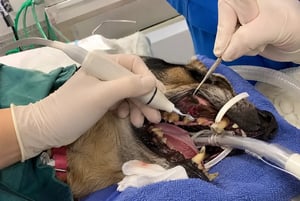
Once tartar has hardened, it cannot be safely removed at home. Professional veterinary cleaning is required to scale teeth thoroughly and assess the areas below the gum line.

After a cleaning, plaque begins forming again within hours. That’s why home care becomes especially valuable afterward. Daily maintenance helps keep teeth cleaner for longer and may reduce how frequently advanced procedures are needed.
split_image_4

Frequently Asked Questions

How common is dental disease in pets?

Very common. Many dogs and cats show early signs by the age of three, even if they appear healthy otherwise.

Is bad breath normal?

Persistent bad breath is usually an early signal of plaque build-up or gum irritation. Sudden or very strong odour should be discussed with a veterinarian.

Does dry food clean teeth?

Dry kibble may create light friction, but it does not replace dedicated dental care. Plaque tends to accumulate along the gum line, where kibble has limited effect.

How often should I clean my pet’s teeth?

Daily care is ideal. Plaque forms every day, so regular interruption is key.

Can dental chews replace brushing?

They help, particularly for dogs, but brushing remains the most effective method when tolerated.

When should dental care begin?

As early as puppyhood or kittenhood. Early exposure makes lifelong routines easier.

7 Signs Your Pet 
May Be Uncomfortable

Dental discomfort is often one of the first signs something isn’t quite right.
But many signs of pain in pets are subtle — and easy to miss. From changes in appetite or chewing habits to bad breath, low energy, or behavioral shifts, your pet may be trying to tell you something.


Understanding these early signals can make all the difference.
That’s why we created this practical guide — to help you recognize the signs of discomfort early and know what to do next. 

Book